What are Cooperative Intelligent Transport Systems (C-ITS)?
Cooperative Intelligent Transport Systems Nodeon Asgard R&D Smart City Smart Mobility
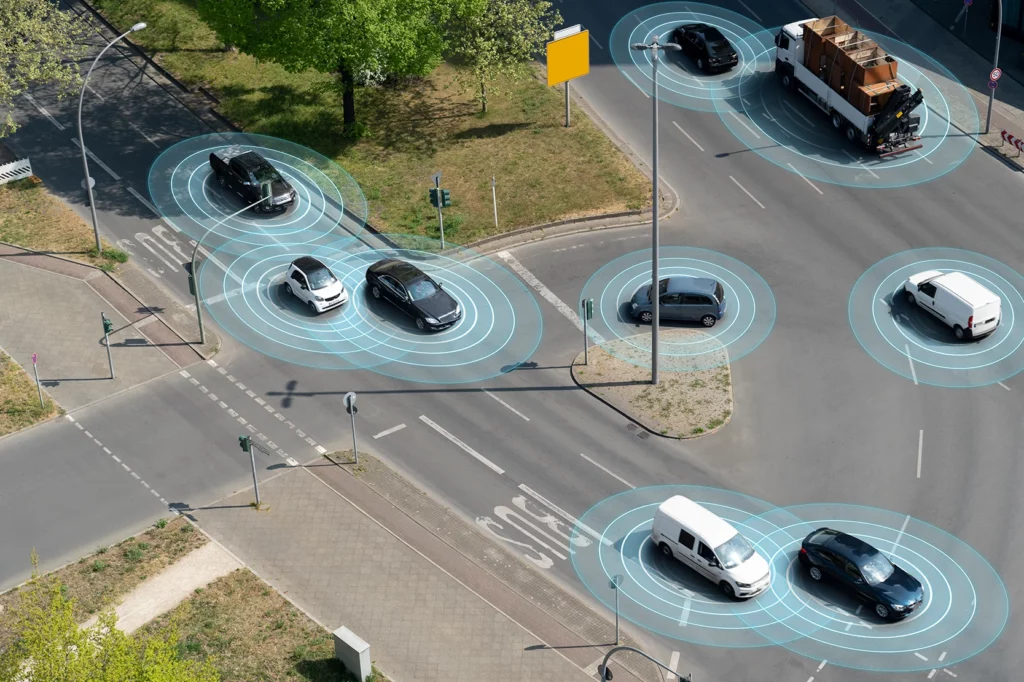
C-ITS (Cooperative Intelligent Transport Systems) are the future of transportation. These systems enable vehicles, infrastructure, and other transport operators to communicate with each other in real-time. But what exactly is C-ITS, what challenges does it address, and what is the current status of its implementation in Finland and Europe?
What are C-ITS?
C-ITS includes the technologies and services that enable real-time data exchange between vehicles and infrastructure. Through this exchange, drivers can respond to potential hazards, traffic jams, and adjust their actions accordingly. The result is improved traffic safety, efficiency, and environmental sustainability.
What challenges does C-ITS address?
The growing challenges in traffic, such as congestion, accidents, and environmental impacts, require new solutions. C-ITS services aim to address these challenges.
- Traffic safety: Communication between vehicles can reduce accidents by warning drivers of potential hazards in advance. Vehicles can share information about slippery road sections, obstacles, such as an approaching highway construction site, allowing drivers to prepare and reduce speed in time.
- Traffic flow: Real-time information reduces congestion and unnecessary stops. Vehicles can receive data about traffic ahead and choose alternative routes or adjust their speed based on traffic light timings. Additionally, emergency vehicles and public transport can be given traffic light priority.
- Environmental impact: Optimized traffic flow reduces emissions and fuel consumption. When vehicles move more smoothly without sudden stops and accelerations, carbon dioxide emissions decrease, and air quality improves, especially in the busiest urban areas.
The technologies behind C-ITS
Several technologies and systems enable data transmission behind C-ITS. These include:
- ITS-G5: A short-range radio technology that enables fast and reliable data transfer between vehicles and between vehicle and infrastructure.
- C-V2X: A communication system based on mobile network technologies, which enables short-range data transfer as mentioned above, while also extending the range to enable communication with infrastructure.
- Cloud services: These collect and transmit large amounts of real-time traffic data in long-range solutions. They analyze data that can be used in traffic management and forecasting.
- Detection devices and systems: Various traffic systems and detection devices are widely used to create a unified real-time situational awareness of traffic.
The current state of C-ITS development in Finland and Europe
The implementation of C-ITS has progressed in recent years through the European Commission’s work on defining C-ITS systems. The goal is to create a cross-border, pan-European C-ITS system. This work is based on a strategy approved by the Commission in 2016 for the development of a connected, cooperative, and automated mobility (CCAM) system.
One of Europe’s most significant C-ITS development projects is C-Roads, which connects multiple national and regional C-ITS stakeholders. The project promotes the deployment of a unified European C-ITS system in line with the CCAM strategy.
In Finland, pilot projects have included data exchange between traffic lights and vehicles, as well as autonomous driving in northern weather conditions as part of the NordicWay project, a long-term joint Nordic C-ITS development initiative. The Transact research project also tested data exchange between autonomous vehicles and traffic lights, as well as operations in various scenarios.
Summary
Cooperative Intelligent Transport Systems (C-ITS) address current transportation challenges by improving safety, efficiency, and environmental sustainability. With ongoing development, we can expect even smarter transportation systems in the coming years, as long as Europe’s common practices and infrastructure mature. The technologies are already in place – they are currently being tested and piloted through collaboration between different countries and stakeholders.
Nodeon delivers pioneering C-ITS solutions
C-ITS solutions offer endless opportunities for developing traffic in urban and highway environments, as well as providing new services for traffic users. Nodeon offers the expertise and solutions you need to implement your C-ITS project.
Would you like to hear more?
Our experts are happy to discuss your needs further. Contact us!

Timo Majala
+358 40 7511 790
timo.majala@nodeon.com
News and articles

What is light pollution and how can it be reduced in cities?
Read more
Traditional SCADA and PLC systems are cornerstones for digital development
Read more
Kuopio pilots real-time situational awareness for street maintenance
Read more
Boosting business development in cities with mobility data
Read more
Nodeon participates in the planning of Raisio Tunnel
Read more
Turning regulation into a competitive edge for critical infrastructure operators
Read more
EV charging network expands — heavy transport up next
Read more