What is light pollution and how can it be reduced in cities?

Light pollution is excess or poorly directed artificial light that disrupts natural darkness and harms both the environment and human health. Modern cities can significantly reduce light pollution by investing in professional lighting design. Properly implemented solutions minimize environmental impact and create a more pleasant urban environment.
Why is light pollution a problem in cities?
The ecological effects of light pollution are particularly significant for wildlife. Many species rely on natural darkness for navigation, reproduction, and feeding. Light pollution disrupts migratory birds, attracts insects to their deaths near light sources, and interferes with the behavior of nocturnal animals. Extended periods of artificial “daylight” can also disturb plants’ natural growth cycles.
“Lighting designers need to know how to design darkness as well.”
Poorly designed or glaring lighting is also disruptive to humans, affecting sleep, reducing visibility, and increasing the risk of traffic accidents. Additionally, light pollution wastes energy, creates unnecessary costs, and increases carbon emissions when more light is produced than actually needed.
Natural darkness is itself a valuable and increasingly scarce resource, making its preservation an important part of sustainable urban development. Therefore lighting designers need to know how to design darkness as well.
Read more: Dimming profiles enable up to 33% energy savings in LED outdoor lighting
How does light pollution occur in cities?
Light pollution refers to excessive or poorly directed artificial light that disrupts natural darkness at night. It is a byproduct of modern society that diminishes the visibility of the night sky and negatively affects both humans and wildlife. Light pollution appears in several forms, such as skyglow, glare, and unnecessary illumination.
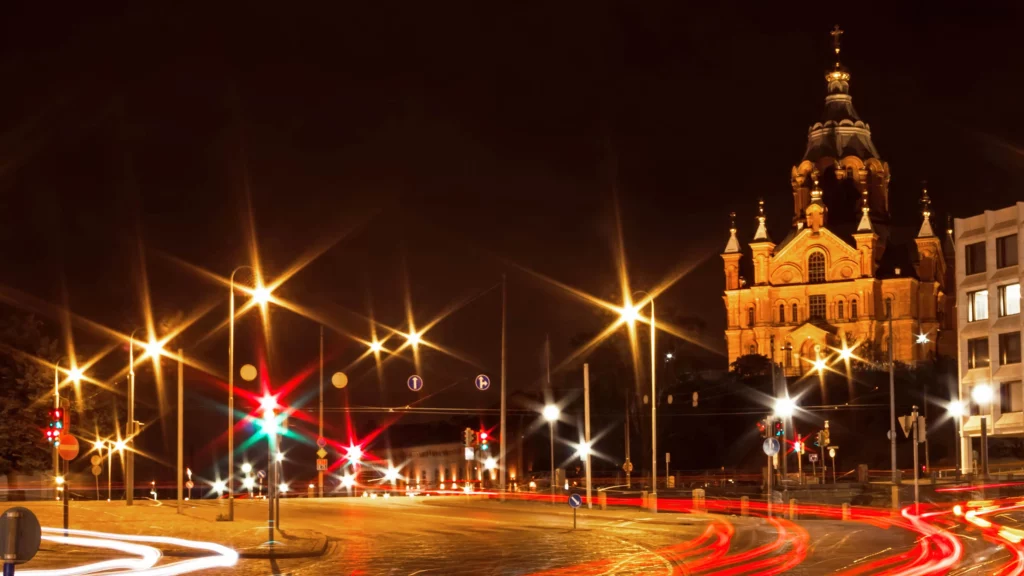
In cities, light pollution is caused by multiple sources: streetlights, advertising signs, buildings, and sports field lighting. The biggest issue is often poorly designed lighting, where light is directed sideways or upward into the sky instead of effectively illuminating only the area that needs it. Excessively bright lighting and illumination during times when it is not needed also contribute to pollution.
As cities grow and lighting increases, light pollution is becoming an significant environmental challenge.
Read more: Viherkallio residents’ park’s lighting integrates naturally with the environment
How smart LED lighting can reduce light pollution
Smart LED lighting can greatly reduce light pollution in cities. LED technology itself is a step in the right direction, consuming less energy and allowing more precise light direction compared to traditional streetlights, such as discharge lamps.
When combined with intelligent control systems, the benefits increase. Smart lights can dim or brighten automatically based on need, for example using motion sensors or time of day. At night, when traffic is low, lights can operate at reduced intensity and brighten only as needed.
Smart LED systems also offer flexibility and precision. They can adjust color temperature, which is important ecologically—cool, blue-rich light disrupts animals and human circadian rhythms more than warm white or yellow light. Each fixture can be controlled individually, allowing light to be directed precisely where it’s needed without unnecessary spill into the sky.
Cities that have adopted smart lighting report significant energy savings while improving lighting quality and reducing light pollution. Technology alone, however, is not enough—good planning and an understanding of when and where light is truly needed are essential.
Read more: Upgrading outdoor lighting offers a quick return on investment
Practical ways for cities to reduce light pollution
Cities can effectively reduce light pollution by investing in professional lighting design. A good lighting plan starts with a comprehensive survey: which areas truly need light, when, and at what intensity. Key strategies include:
- Consider first whether light is necessary at all
- Limit the amount of light
- Limit the hours the lights are on
- Pay attention to light direction and glare
- Consider light color temperature
Professional lighting designers analyze city characteristics, traffic flows, safety needs, and ecological factors. They select the right types of lighting for different environments and account for special sites such as historic buildings, parks, and waterways.
A skilled design partner can also help cities develop a long-term plan with clear goals for reducing light pollution, improving energy efficiency, and maintaining high lighting quality. The plan may include phased adoption of LED technology, deployment of smart lighting in priority areas, and guidelines for private and commercial lighting.
When a city collaborates with professional lighting designers, the result is a system that saves energy, reduces light pollution, improves safety, and creates a pleasant urban environment—all at the same time.
Need help with urban lighting design?
Nodeon is a specialist in outdoor lighting design and consulting services, helping cities and organizations reduce light pollution and improve lighting quality. We offer broad expertise in lighting technology, as well as electrical, control, and telecommunications systems to ensure modern smart lighting works effectively.
We design lighting solutions tailored to our clients’ needs, balancing quality, cost-efficiency, and environmental responsibility. Our goal is lighting that is functional, safe, smart, and environmentally considerate. Contact us to plan better lighting for your city!
Explore our outdoor lighting design and expert services
Would you like to hear more?
Our experts are happy to discuss your needs further. Contact us!

Juhani Saari
Tiimipäällikkö, valaistus
+358 40 717 9816
juhani.saari@nodeon.com